

Build machine learning models for regression, classification and clustering using custom and benchmark datasets.
Transform your data →
Develop RAG-optimised LLMs with tool capability using domain-specific knowledge bases and prompt engineering skills.
Design smart systems →
Implement AI systems that process and generate data in the form of video, audio, images and text for a range of applications.
Create without limits →
Discover the key platforms, frameworks, tools and APIs that enable smarter, faster model development in AI Modeler.
Explore AI innovation →


AI Modeler is also available as a standalone desktop version for both macOS and Windows, with the docker version currently in development. These standalone packages come bundled with their own SQLite database and Jupyter environment. You can use your own API keys and credentials to build ML, LLM and GenAI models without the complexity of learning dozens of tools, frameworks and services.
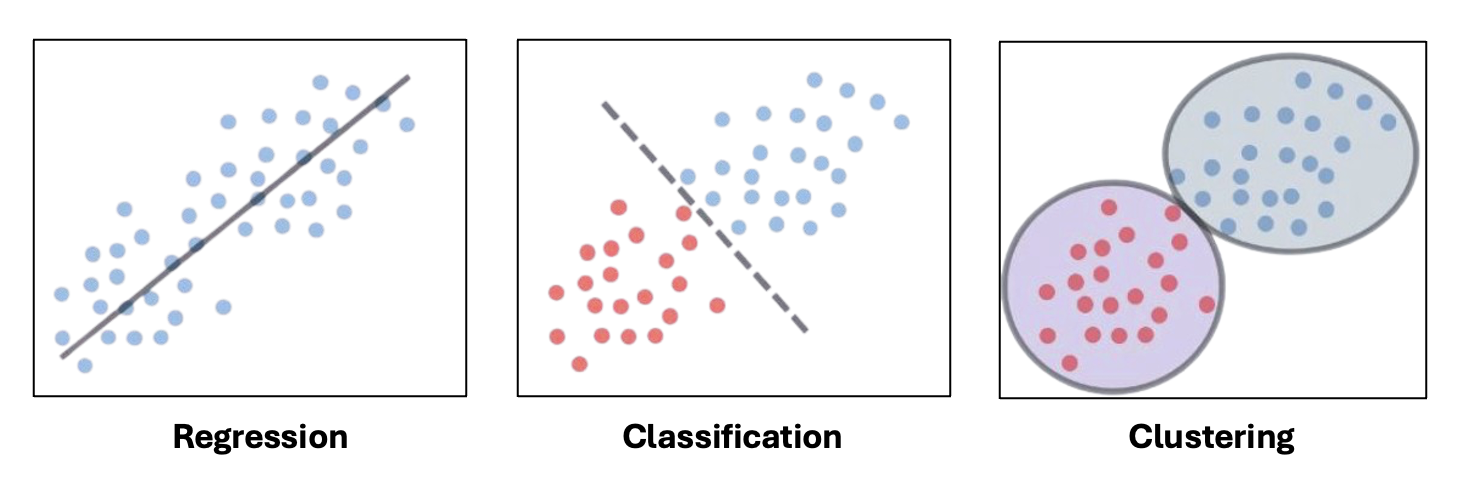
The field of machine learning is generally considered to have originated in the 1950s, although the mathematical methods and algorithms it is built upon date much earlier. Arthur Samuel, a prominent American computer scientist, defined machine learning as "the field of study that gives computers the ability to learn without being explicitly programmed".
There are three different machine learning tasks that can be carried out on structured data - regression involves predicting a continuous, numerical value such as a house price, classification entails predicting a discrete class or category such as a dog breed and clustering is concerned with finding natural groups in unlabelled data such as customer segmentation.
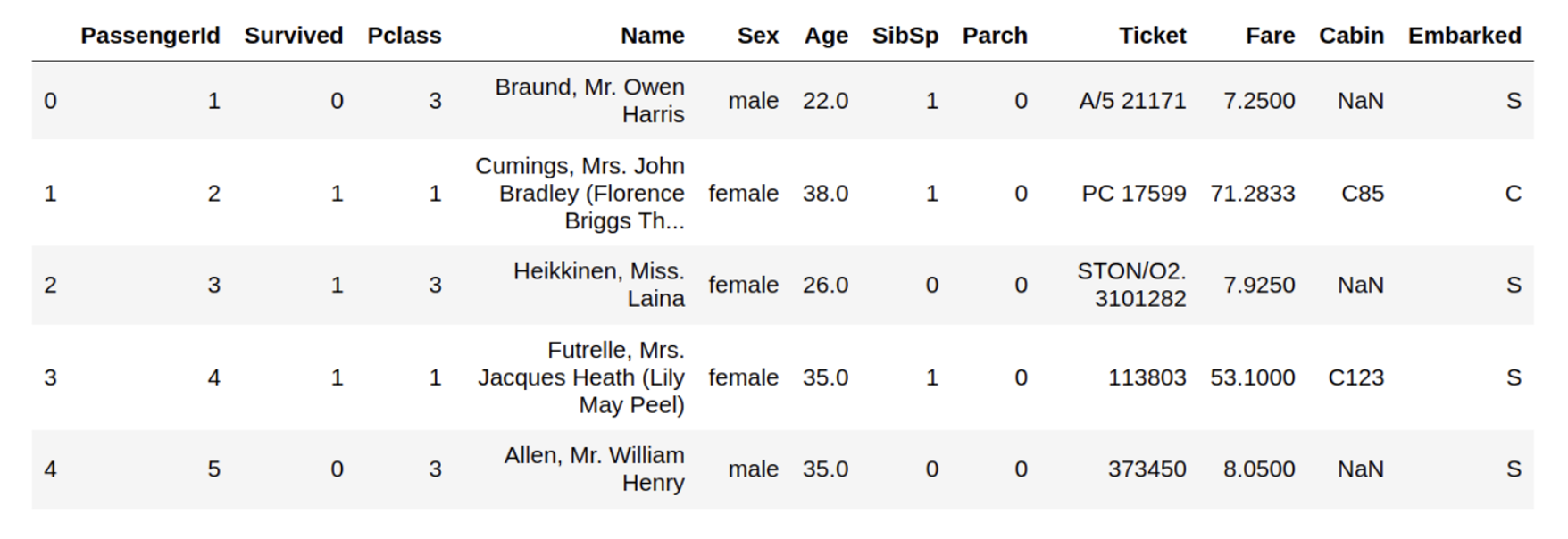
The table shown is a small extract from one of the thousands of benchmark and public datasets used in education and research to learn and experiment with different models. This particular dataset lends itself to classification, in this case predicting if a passenger on the Titanic was likely to survive the disaster using feature values that are either numerical or categorical.
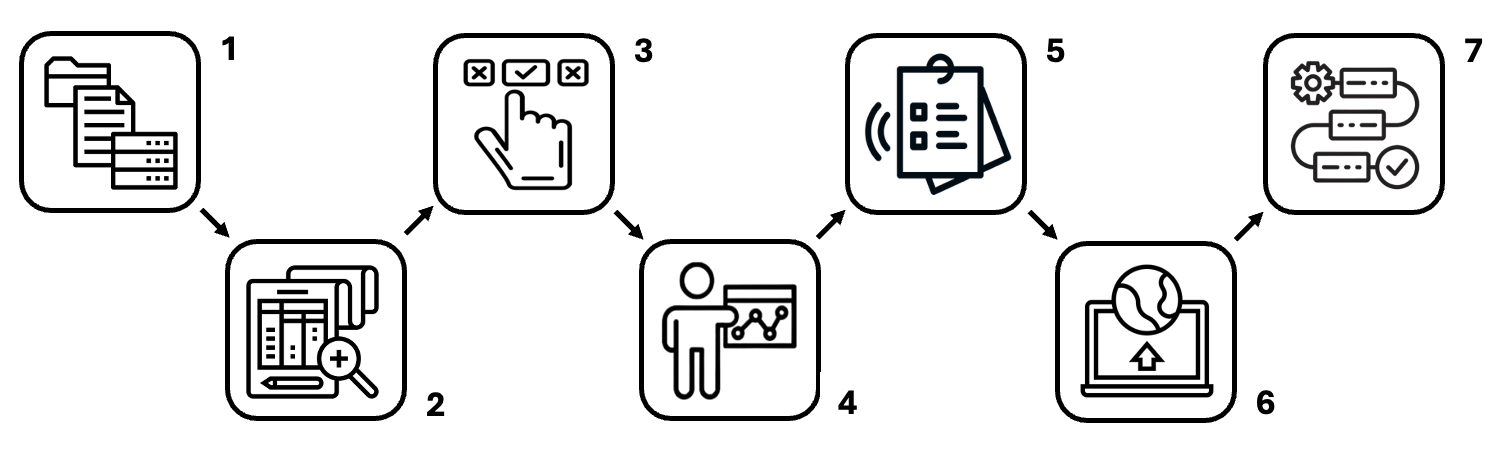
As machine learning evolved it increasingly adopted principles from the Software Development Lifecycle resulting in more structured, repeatable and maintainable development practices.
A machine learning workflow can be viewed as a sequence of stages that takes a project from data ingestion through model deployment, monitoring and maintenance, with each stage contributing to the successful development and operation of the solution.
AI Modeler supports two workflow options - baseline or enhanced. The baseline workflow includes the core stages required to develop, evaluate and deploy a machine learning model, making it suitable for educational use and research projects.
The enhanced workflow builds on this foundation by including additional stages to improve model transparency, reproducibility and real-world application, introducing learners to common practices in modern machine learning and MLOps workflows.
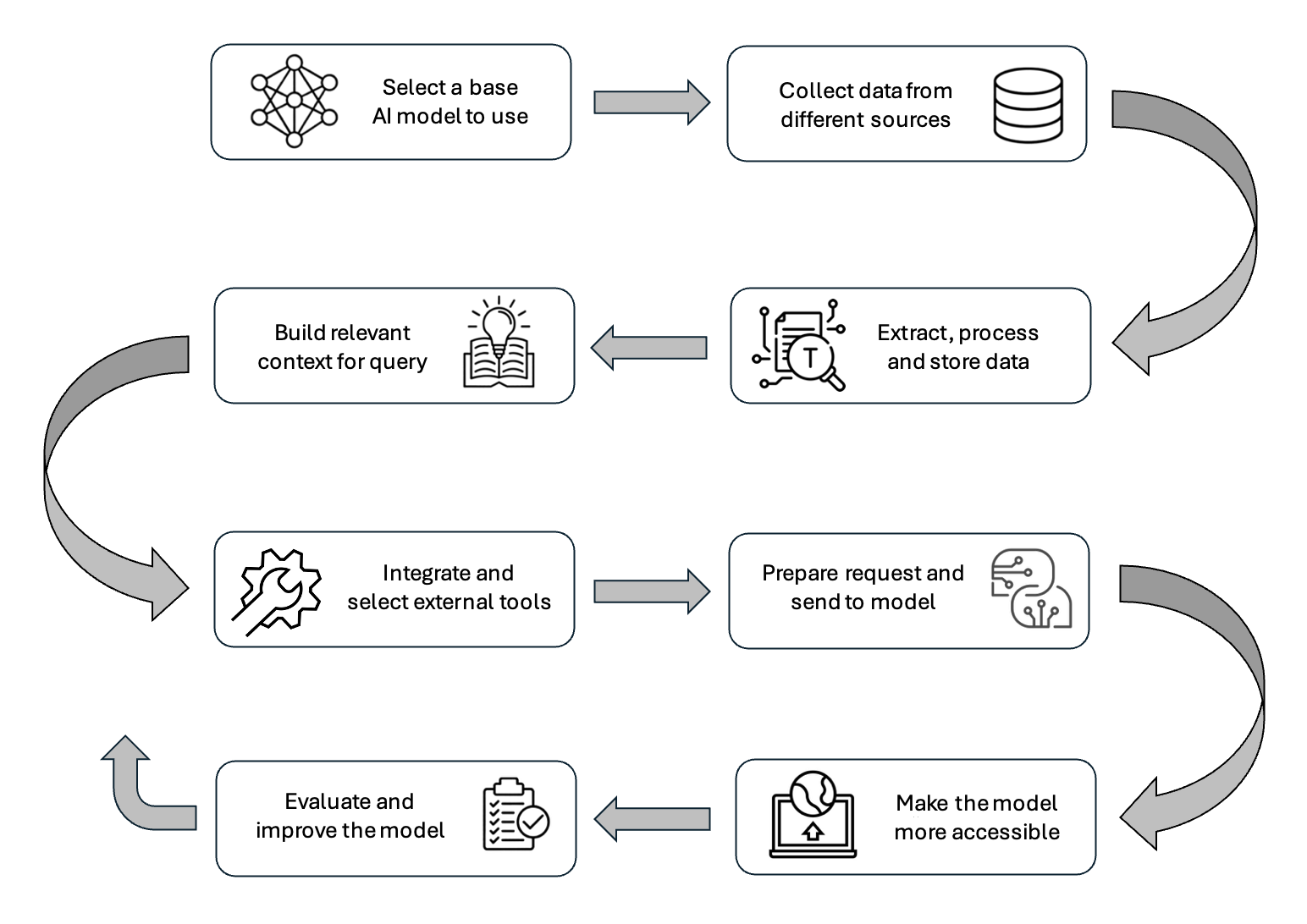
Large Language Models (LLMs) gained widespread attention after the release of OpenAI's ChatGPT in 2022 which demonstrated the use of Generative AI to understand and produce human-like text.
Since then, LLMs have evolved and are now used in a wide range of applications including conversational systems, information retrieval, content generation and coding assistance.
The development of LLMs is based on Transformer architecture and introduced two key approaches. Encoder-only models are designed to understand and represent the meaning of input text by analysing the relationships between words, while Decoder-only models are designed for text generation by predicting the next token in a sequence after analysing the preceding context.
AI Modeler provides a modular environment to explore and optimise LLM-based solutions. Users can choose different foundation models, connect external data sources, build specialised knowledge bases, configure retrieval and response generation components and evaluate models through a structured workflow.
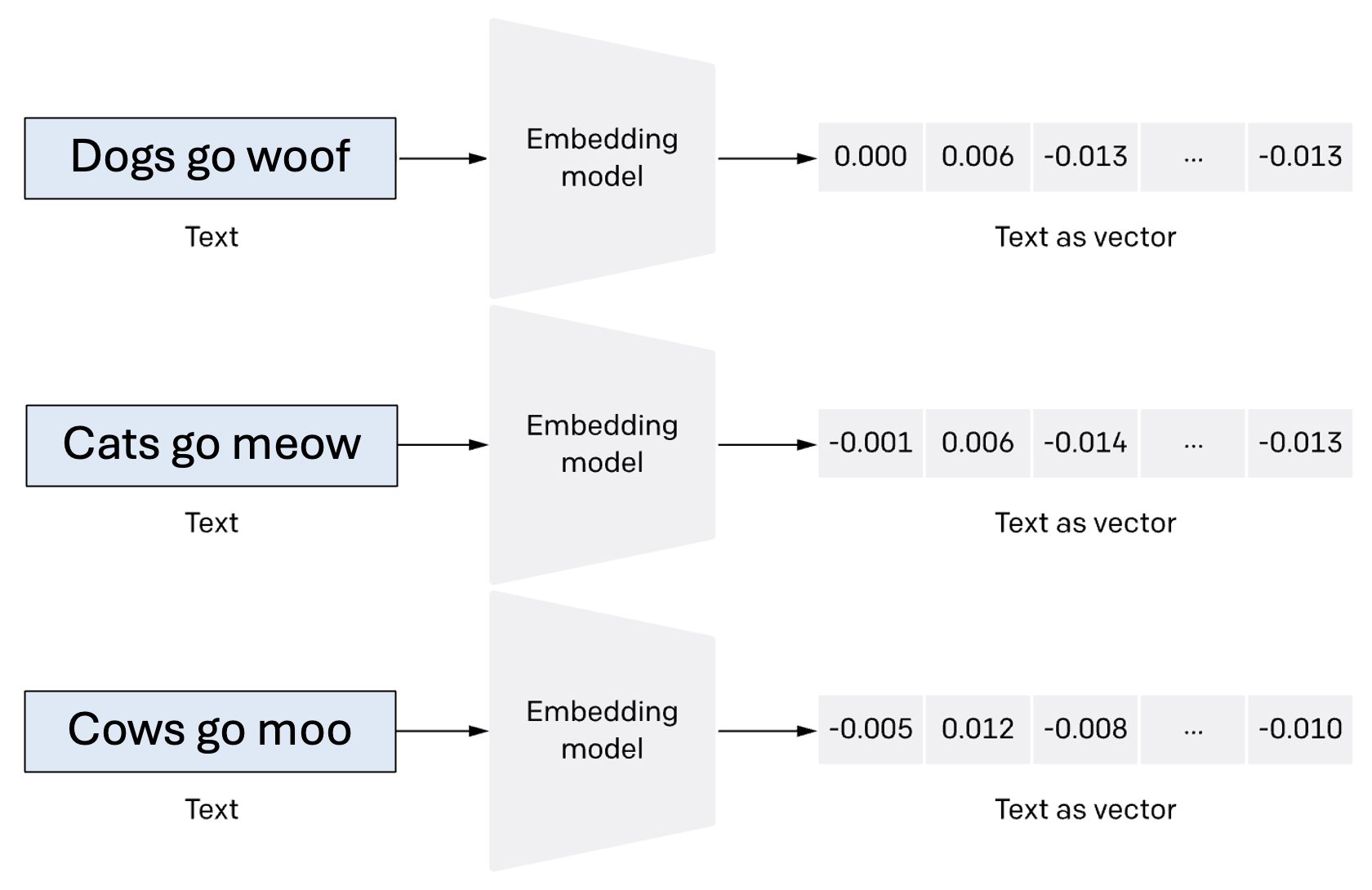
Text embedding is a technique used in AI applications to convert words, sentences or documents into numerical representations called vectors (or embeddings). These vectors capture aspects of the meaning and relationships within text allowing machine learning systems to compare and identify similarities between different pieces of information. For example, the words 'dog', 'cat' and 'cow' can each be represented as a vector containing numerical values.
While the individual numbers have no direct human meaning the position of each vector within the embedding space reflects relationships learned from language data. Words or phrases with similar meanings or contexts are positioned closer together allowing systems to recognise that while all animals are related concepts, dogs and cats are closely associated through shared contexts such as pets and domestic life but cows, typically, are not.
Text embedding forms an important part of modern AI systems, particularly Retrieval-Augmented Generation (RAG) where documents and user queries are converted into vectors so that similar pieces of information are identified and provided to the LLM.
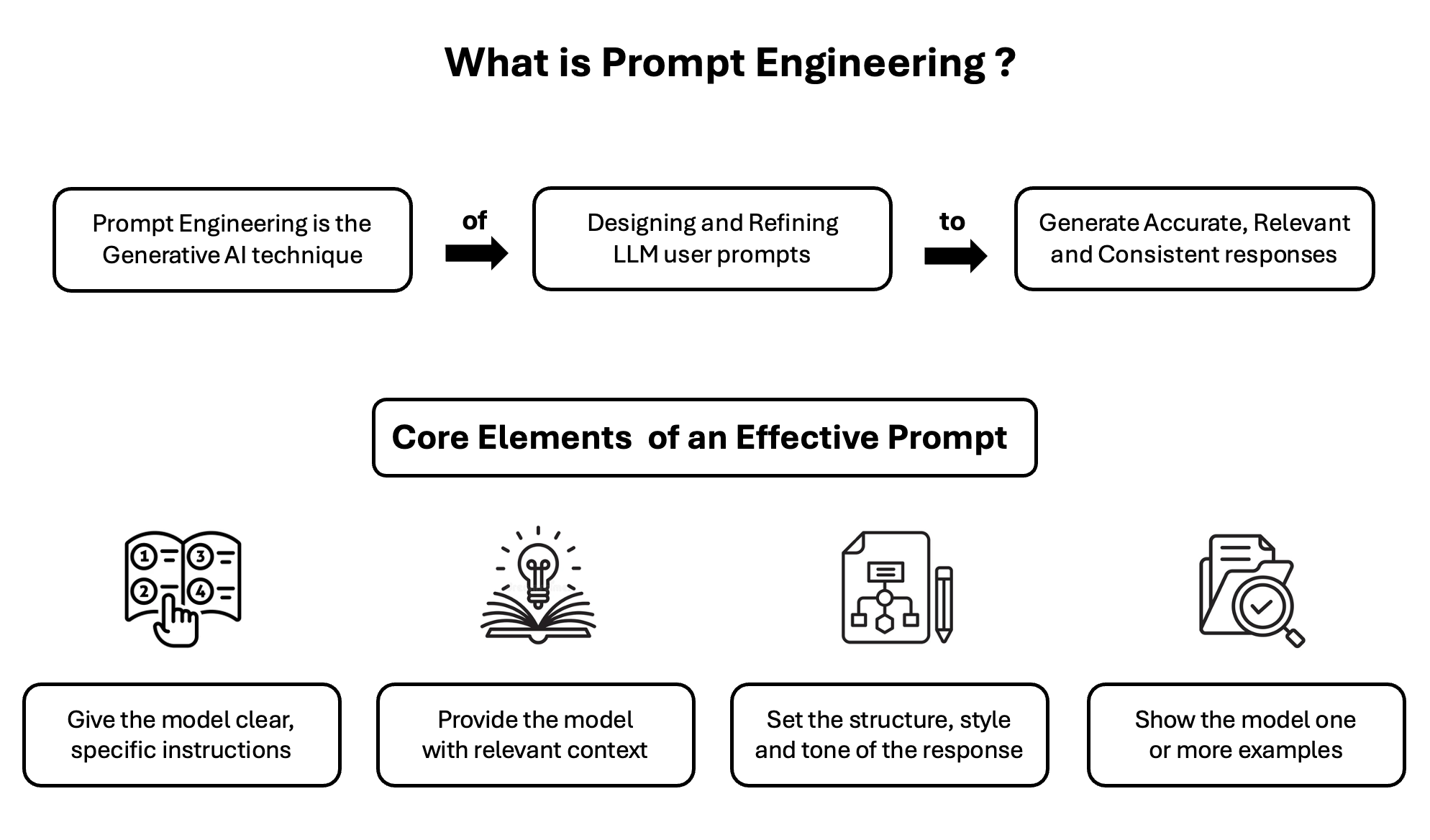
Prompt engineering is the process of designing and refining the instructions that are provided to an LLM to influence the accuracy, relevance and consistency of its responses. A well structured prompt will provide a sequence of messages containing instructions, context, constraints and examples to enable the model to generate outputs that are more consistent and aligned with user requirements.
For example, if you were to ask an LLM to "summarise this report into 100 words for a non-technical audience" it is likely to produce a more useful result than simply asking it to "summarise this report".
Effective prompt engineering often involves techniques such as assigning a specific model role, providing background information, defining the desired output format and including examples of the expected response. These techniques help reduce ambiguity and improve the overall reliability of AI-generated content.
The Smart Way to Build, Deploy and Learn

Please rotate your device
or switch to a larger screen